Archbishop of Novi Sad and Metropolitan of Backa Irinej Has Reposed in the Lord
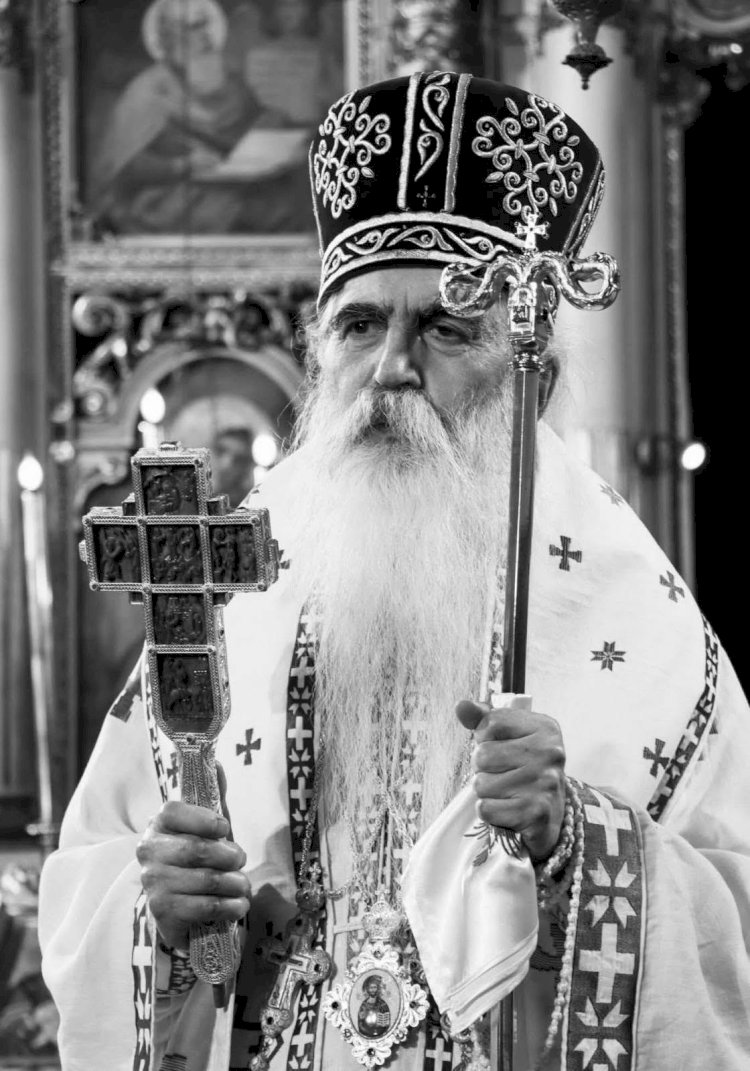
Source: Diocese of Backa
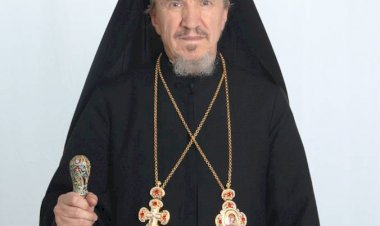
With deep sorrow in our hearts and hope for the Resurrection of the dead and eternal life, the Diocese of Backa informs the faithful people and the fullness of the Serbian Orthodox Church that on Tuesday, November 24, 2026, on the feast of Saint King Stefan of Decani, in the morning hours, at the Institute of Oncology of Vojvodina in Sremska Kamenica, His Eminence Archbishop of Novi Sad and Metropolitan of Backa Irinej reposed in the Lord.
Eternal memory to you, worthy of blessedness and unforgettable one, our father and bishop Irinej!
+++
His Eminence Archbishop of Novi Sad and Metropolitan of Backa, Irinej (Bulovic), was born on February 11, 1947, in the village of Stanisic near Sombor, to parents Mihailo and Zorka Bulovic. At his baptism in the Translation of the Relics of the Holy Father Nicholas Church in Stanisic, on February 16, 1947, he was given the name Mirko. He celebrated his Slava (patronal feast) on the Feast of Saint John the Baptist – Saint John’s Day.
He completed elementary school in his native Stanisic in 1961, and high school in Sombor in 1965. With the blessing of the late Bishop of Backa, Nikanor (Ilicic), he enrolled in the Faculty of Theology of the Serbian Orthodox Church in Belgrade in 1965, and graduated from the same in 1969, with excellent results (an average grade of 9.47). At the same time as the Faculty of Theology, he also studied at the Department of Classical Sciences of the Faculty of Philosophy in Belgrade in order to become better acquainted with classical languages.
During his studies, in 1968, with the blessing of Bishop Nikanor of Backa, he transferred from the Diocese of Backa to the Diocese of Raska and Prizren. In the same year, on the feast of the Annunciation, in the Celije Monastery near Valjevo, he received monastic tonsure from his spiritual father, Abba Justin Popovic, receiving the monastic name Irinej. In the autumn of the same year, Bishop Pavle of Raska and Prizren (later the Serbian Patriarch) ordained him as a hierodeacon in the Holy Great Martyr George Cathedral in Prizren, and then, on the feast of the Exaltation of the Holy Cross, to the rank of hieromonk in the Holy Trinity Monastery near Musutiste (Metohija). With the blessing and decision of the Holy Synod of Bishops, shortly after the establishment of the Monastic School at the Ostrog Monastery, he resided in the aforementioned monastery from 1969 to 1970 and, as a substitute, taught at the aforementioned school. He spent the decade from 1970 to 1980, with the blessing and care of the then Bishop of Raska and Prizren, Pavle, in Athens on postgraduate studies at the Faculty of Theology of the University of Athens. During the academic year 1974–75, as a substitute, he was a teacher at the Theological Seminary of Saints Cyril and Methodius in Prizren.
During his stay in Athens, he served at the monastery of Saint Nicholas in Kallisia, near Pendelios (Attica), under the spiritual care of the holy elder Porphyrios of Kafsokalyvia. In June 1980, he defended his doctoral dissertation entitled Τὸ μυστήριον τῆς ἐν τῇ Ἁγίᾳ Τριάδι διακρίσεως τῆς θείας οὐσίας καὶ ἐνεργείας κατὰ τὸν ἅγιον Μᾶρκον Ἐφέσου τὸν Εὐγενικόν (The Mystery of the Distinction of the Divine Essence and Energy in the Holy Trinity According to Saint Mark Eugenikos of Ephesus). The Serbian translation of this theological study, entitled Tajna razlikovanja božanske suštine i energije u Svetoj Trojici po svetome Marku Efeskom Evgeniku, was published in 2019 as a joint publishing venture of Beseda, the publishing house of the Diocese of Backa, and Matica Srpska.
After his studies in Athens, he went to the Theological Institute of Saint Sergius in Paris, where, during his study stay (1980–81), he became acquainted with leading figures and literature of contemporary Russian theology. He was elected as an assistant professor at the Department of the Holy Scriptures of the New Testament at the Faculty of Theology in Belgrade in 1981, and at the same time became a teacher of the Greek language. In the same year, he received canonical admission to the Archbishopric of Belgrade and Karlovac from the late Serbian Patriarch German. After his election as Dean of the Faculty of Theology in the academic year 1986–87, the late Patriarch German awarded him the rank of Protosyngel in 1987. He was re-elected to the position of Dean in 1987–88, and in 1991 he was elected to the title of associate professor. He was elected a full professor by invitation at the Theological Academy of Saint Basil of Ostrog in Srbinje in 1996. The Teaching and Scientific Council of the Faculty of Theology in Belgrade elected him a full professor in 2001. During his decades of work at the Faculty of Theology in Belgrade, he was re-elected to the position of Dean of the Faculty, first in the period from 2006 to 2009, and then in the period from 2009 to 2012. He made a great contribution to the establishment of the Biblical Institute at the Orthodox Faculty of Theology in Belgrade. After thirty-four years in the service of teaching at the Faculty of Theology, he retired on October 1, 2015.
At the regular session of the Holy Synod of Bishops of the Serbian Orthodox Church in the Patriarchate of Pec, on July 26, 1989, the Vice-Dean of the Faculty of Theology, Archpriest Irinej (Bulovic), was elected Bishop of Moravica, Vicar of the Serbian Patriarch German. On July 31 of the same year, the Holy Synod of Bishops conferred on him the rank of Archimandrite. Due to the illness of Patriarch German, he waited less than a year for episcopal ordination. It was performed, according to the decision of the Council of May 17, 1990, by Metropolitan Jovan of Zagreb and Ljubljana, with the concelebration of Bishops Pavle of Raska and Prizren, Stefan of Zica, Sava of Sumadija, Danilo of Buda and Amfilohije of Banat, in the Holy Apostles Church in the Patriarchate of Pec, on May 20, 1990. At the same session of the Holy Council of Bishops, he was elected administrator of the Diocese of Backa in Novi Sad, and the previous administrator, Bishop Sava of Sumadija, installed him in office on June 17, 1990.
At the session of the Holy Council of Bishops on December 6, 1990, he was elected diocesan bishop of the Diocese of Backa. The enthronement in Novi Sad was performed by Metropolitan Jovan of Zagreb and Ljubljana on December 23 of the same year.
According to the decisions of the Holy Synod of Bishops and the Council, he served as administrator of the following dioceses: the Diocese of Backa (1990), the Diocese of Austria and Switzerland (2011–2014), the Diocese of Osijek Plain and Baranya (2017–2018), church units in Austria (2023–2024) and the Diocese of Austria (2024–2026).
During his episcopal service, he actively participated in the work of the Holy Synod of Bishops. On several occasions, he was elected a member of the Holy Synod of Bishops and the Great Church Court, as well as a member of many important church commissions and delegations. It is especially worth mentioning his participation in: the Committee of the Council of the Serbian Orthodox Church for Kosovo and Metohija, in the Council Commission for the preparation of proposals for the proclamation of saints of the Serbian Orthodox Church, in the Council Commission for the unification of the order of worship, in the Council Commission for the study of liturgical issues, in the Council Commission for the revision of the Constitution of the Serbian Orthodox Church, in the Council Commission for dialogue with representatives of the Macedonian Orthodox Church (then in schism), in the Council Commission for dialogue with representatives of the Romanian Orthodox Church, in the Pan-Orthodox preparatory commission for the Holy and Great Council of the Orthodox Church, in the Council Commission for the preparation and participation of our Church in the Holy and Great Council, in the delegation of the Serbian Orthodox Church at the session of the Holy and Great Council in Crete in 2016, in the Pan-Orthodox commission for theological dialogue with the Roman Catholic Church, in the Pan-Orthodox Commission for Dialogue with Lutherans, in the Mixed Commission of the Serbian Orthodox Church and the Croatian Bishops' Conference for Consideration of the Role of Cardinal Alojzije Stepinac Before, During and After World War II, in the Commission of the Holy Synod of Bishops for Dialogue with the Analogous Commission of the Bishops' Conferences of Croatia and Serbia and Montenegro, in the Commission of the Synod for Dialogue with the Croatian Bishops' Conference, in the Commission of the Holy Synod of Bishops of the Serbian Orthodox Church for the Translation of the Holy Scriptures of the New Testament and in the Commission of the Holy Synod of Bishops for the Review and Revision of Liturgical Books in the Serbian Orthodox Church.
He published many theological works and studies, a large number of popular articles and interviews, as well as numerous translations. In addition to membership in several editorial boards, he was the editor of Pravoslavni misionar (Orthodox Missionary), a magazine published by the Holy Synod of Bishops, as well as Beseda (Homily), a theological magazine of the Diocese of Backa.
He was a member of the Association of Biblical Theologians of Greece, the Association of Writers of Serbia, the Serbian Literary Guild, the Committee of the Movement for Unity and Cooperation of Spiritually Related Eastern Christian Peoples, and the Religions for Peace Council of Religious Leaders of Europe.
He was a member of Matica Srpska with the status of permanent associate member, as well as a member of the Njegos Board of Matica Srpska and many other organizational and honorary boards.
During the period of our people's return to faith and the Church, in the late 1980s and early 1990s, he was the first clergyman to speak about the truths of faith on state television in Belgrade, which had previously been inaccessible for church and religious content. In January 1990, on the feast of the Nativity of the Lord Jesus Christ, he participated in the organization and realization of the first direct television broadcast of the Holy Liturgy from the Cathedral Church in Belgrade, which was broadcast on Television Belgrade.
With the blessing of the Holy Synod of Bishops, in 1990, in cooperation with Metropolitan Amfilohije (Radovic) and the Dean of the Faculty of Theology in Belgrade, Archimandrite Atanasije (Jevtic), he began a pioneering venture called Pravoslavni video-bukvar (Orthodox Video-Primary), implemented by Sandra-Video Belgrade. The following year, as Bishop of Backa, he launched, together with Milorad Vucelic, an initiative for the Diocese of Backa, in cooperation with Television Novi Sad, to start a series called Bukvar Pravoslavlja (Primary of Orthodoxy). According to his script, over the course of eight years, and with the help of expert collaborators, the then Kovilj hieromonks Porfirije (Peric) and Fotije (Sladojevic), the then deacon Vladimir Vukasinovic, the late nun Nektarija (Karajcic), Jordanka Lukic, Goran Vukcevic and many other collaborators, one hundred and thirty episodes were recorded, both in our country and in Greece, Cyprus and Hungary, and broadcast over the course of seven and a half years as public religious education sui generis before the return of religious education to public schools.
Due to his extensive experience in working with the media, his knowledge and moderation in speaking and expressing the views of the Serbian Orthodox Church, in 1992 the Holy Council of Bishops authorized him "to communicate official information about the life and work of the Serbian Orthodox Church", and in 2009 officially asked him to accept the duties of spokesperson for the Holy Council of Bishops.
During the difficult war times of the 1990s, with the blessing of Patriarch Pavle and the Holy Synod of Bishops, he participated in all important discussions between representatives of the Church and the State, as well as with political representatives of Serbs in war-torn areas and with envoys of the international community.
He made a great contribution to improving relations between the Church and the State, which resulted in the return of religious education to primary and secondary schools in the Republic of Serbia, the return of the Faculty of Theology to the University of Belgrade, the adoption of the Law on Churches and Religious Communities in the Republic of Serbia and the Law on the Restitution of Church Property. He was the President of the Commission of the Government of the Republic of Serbia for Religious Education in Schools, of which he had been a member since its establishment.
He participated in many domestic and international theological and scientific gatherings and conferences, in spiritual forums and in inter-Christian meetings and dialogues, as well as in domestic and international meetings and dialogues with Jewish and Islamic communities, institutions and organizations.
With his blessing, and under the auspices of the Kovilj Monastery, the therapeutic community Zemlja živih (Land of the Living) began to operate. He also launched the work of the Bishop Platon Atanackovic Charitable Institution of the Diocese of Backa with the People’s Kitchen. He initiated the launch of media activities in the Diocese of Backa by founding Vinograd Gospodnjeg (The Lord's Vineyard) as a diocesan newspaper, and then the Information Service of the Diocese of Backa, TV production and four radio stations. He increased the number of clergy and improved their position and status. With his blessing, old churches were renovated and numerous new churches were built in the Diocese of Backa.
For his dedicated service to the Orthodox Church and the Serbian people, Bishop Irinej received many decorations and recognitions, such as:
- Order of Njegos, First Class, Republika Srpska, 1993;
- Order of the Holy Emperor Nicholas II Romanov, Third Class, of the Council for Social Awards of the Russian Federation, 2010;
- Saint Sava Award of the Ministry of Education of the Republic of Serbia, 2011;
- Order of the Equal-to-the-Apostles Grand Prince Vladimir, Second Degree, of the Russian Orthodox Church, 2013;
- Order of the Holy New Martyrs of Kragujevac, First Degree, of the Diocese of Sumadija, 2014;
- Honorary doctorate (honoris causa) from the Theological Academy in St. Petersburg, 2019;
- November Charter of the City of Novi Sad, 2020;
- Cross of Leader Djordje Stratimirovic, 2021;
- Middle Cross of the Hungarian Order of Merit of the Republic of Hungary, 2021;
- Order of the Holy Apostles Peter and Paul of the Diocese of Buenos Aires and South and Central America, 2023;
- Order of the Holy Equal-to-the-Apostles Mary Magdalene, Second Degree, of the Holy Synod of Bishops of the Polish Orthodox Church, 2024;
- Order of Glory and Honour, Second Degree, of the Russian Orthodox Church, 2025, and
- Order of Sretenje, First Class, of the Republic of Serbia, 2026.